Brown Fat vs. White Fat: The Body's Built-In Heat Engine Explained

Headlines love to announce a "hidden fat-burning switch." The real science is more interesting, and more modest, than the hype. Here is what researchers actually know about brown fat, and what it does and does not mean for your health after 60.
Two very different kinds of fat
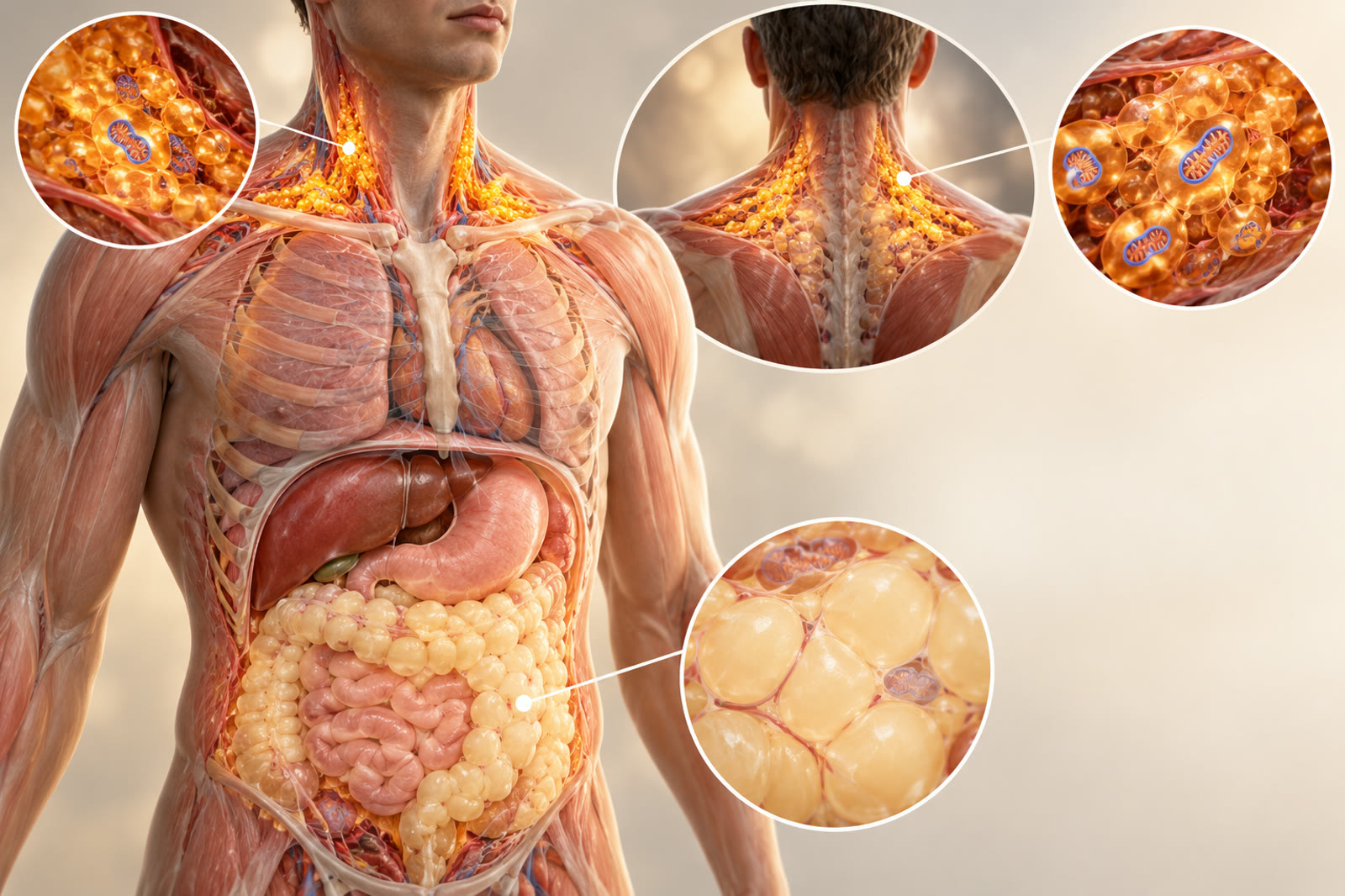
White fat is what most people think of as body fat. Its main job is storing energy, cushioning organs, and releasing hormones that influence appetite and metabolism. Too much of it, especially around the abdomen, is linked with higher risk of heart disease and type 2 diabetes.
Brown fat works differently. Its cells are packed with mitochondria, the tiny energy factories inside cells, and they burn fuel to produce heat rather than store it. This process is called thermogenesis. Newborns rely on brown fat to stay warm, and scientists now know that adults keep smaller amounts, mostly around the neck, collarbone, and upper spine.
Why researchers are excited
Because brown fat burns calories to make heat, scientists are studying whether activating it could help improve blood sugar control and metabolic health. Early research links more active brown fat with better metabolic markers.
The reality check
• Effects on weight appear small. Human studies so far suggest brown fat contributes a modest amount of calorie burning, not a dramatic amount.
• It tends to decline with age and is generally lower in people with higher body weight, which is part of why researchers are curious about it.
• There is no proven "switch." Supplements and gadgets marketed as brown fat activators have not been shown to deliver dramatic results.
What can you do?
Research is exploring several approaches, but the best-supported habits are the familiar ones:
1. Build and keep muscle. Muscle is your biggest metabolic engine. See why weights beat cardio for anti-aging after 60.
2. Stay active daily. Exercise appears to influence fat tissue and metabolic health in beneficial ways.
3. Prioritize sleep and nutrition. Both affect hormones that regulate appetite and fat storage.
4. Be cautious with cold exposure. Mild cool temperatures are being studied, but cold plunges and extreme cold can strain the heart and raise blood pressure. This matters especially for older adults and anyone with heart disease. Check with your doctor first.
The bottom line
Brown fat is a fascinating area of research, but it is not a shortcut. Sustainable healthy weight after 60 still comes down to strength, movement, nutrition, and sleep. For a practical approach, read Healthy Weight Management After 60: What Actually Matters, and be careful with any product promising to "switch on" fat burning; our checklist for evaluating weight-management products can help.
Watch the video: Scientists Just Discovered a Hidden Fat-Burning Switch in Your Body.
Medical disclaimer: DrAIFIT provides general educational information and is not a medical service. This content does not diagnose, treat, cure, or prevent disease. Speak with a qualified healthcare professional before changing your diet, exercise, supplements, or medications.
Get the Free Healthy Aging Guide
Inside the free guide, you'll find the top protein sources for keeping your muscles strong as you age, simple meal-timing strategies for steady all-day energy, everyday foods that help your body fight inflammation naturally, and the #1 supplement mistake adults over 60 make — all explained in plain language you can put to use this week.
Get the Free Healthy Aging GuideSent straight to your inbox — free, no spam, unsubscribe anytime.