Best Protein Powders for Adults Over 60 (2026)
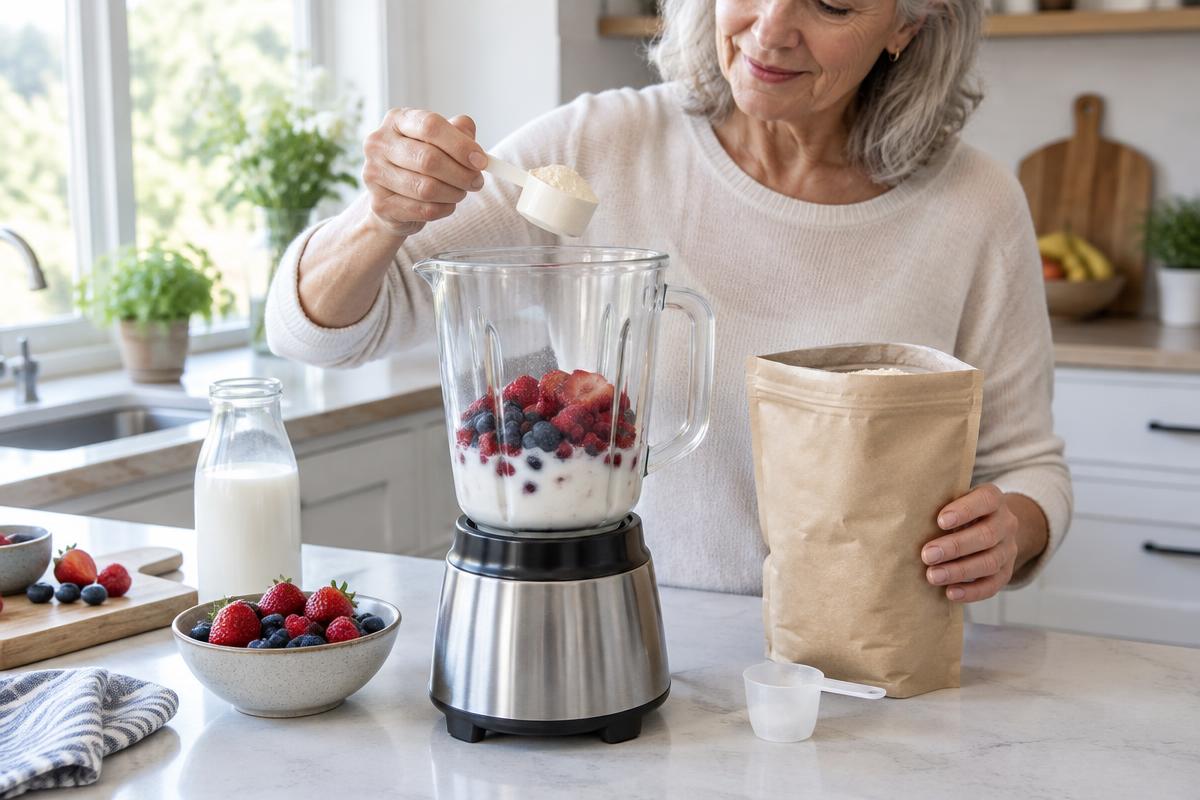
After 60, your body needs more protein — not less. Age-related muscle loss (sarcopenia) accelerates with each decade, and research suggests older adults need roughly 1.0–1.2 grams of protein per kilogram of body weight daily, well above the standard 0.8 g/kg guideline. For a 160-pound adult, that's about 73–87 grams a day — and most people don't get there from food alone.
A good protein powder closes that gap simply: one scoop in a morning shake or smoothie. But the market is crowded, labels are confusing, and not every tub deserves your money. This guide compares five powders on what matters after 60: protein per serving, digestibility, ingredient cleanliness, third-party testing, taste you'll actually stick with, and price per serving. Prices were checked in October 2026 and change frequently — always confirm before buying.
As an Amazon Associate I earn from qualifying purchases.
How we evaluated
- At least 20g protein per serving, with all nine essential amino acids
- Digestibility: isolates over concentrates for sensitive stomachs; lactose content noted
- Ingredient cleanliness: no artificial sweeteners, dyes, or proprietary blends hiding doses
- Third-party testing where available (NSF Certified for Sport, Informed Choice, or Consumer Reports testing)
- Taste and mixability — the best powder is the one you'll drink daily
- Price per serving, because consistency beats premium on a fixed income
Quick comparison
| Product | Protein/serving | Type | Price (approx.) | Best for |
|---|---|---|---|---|
| Transparent Labs 100% Grass-Fed Whey Isolate | 28g | Whey isolate | ~$2.00/serving | Best overall |
| Optimum Nutrition Gold Standard 100% Whey (5 lb) | 24g | Whey blend (isolate primary) | ~$75–85 | Best budget |
| Thorne Whey Protein Isolate | 21g | Whey isolate, NSF Certified for Sport | $65 / 30 servings | Best premium, third-party tested |
| Dymatize ISO100 (5 lb) | 25g | Hydrolyzed whey isolate | ~$93 | Best for sensitive stomachs |
| Orgain Organic Protein | 21g | Plant-based (pea, rice, chia) | ~$26–30 | Best plant-based |
1. Best overall: Transparent Labs 100% Grass-Fed Whey Protein Isolate
The highest protein per serving on this list at 28g, with roughly 85–88% of the powder being pure protein — very little filler. No artificial sweeteners, dyes, preservatives, or gluten, and it rates highly for taste and mixability in independent reviews, with 14+ flavors including unflavored. Grass-fed sourcing and clean labeling make it the complete package for older adults who want the most protein per scoop.
Pros: 28g protein — highest here; no artificial anything; excellent taste and mixability; unflavored option available.
Cons: Premium price at ~$2/serving; not the best value if budget is the priority.
Check Price on Amazon2. Best budget: Optimum Nutrition Gold Standard 100% Whey (5 lb)
The world's best-selling whey for a reason: 24g of protein (isolate as the primary ingredient), 5.5g of naturally occurring BCAAs, and 11g of essential amino acids per serving — at roughly a dollar a serving when you buy the 5 lb tub. Consumer Reports independently tested the Double Rich Chocolate flavor for contaminants, which is rare verification at this price. With 20+ flavors, there's something for every palate.
Pros: Best price per serving here (~$1.00–1.10); independently tested by Consumer Reports; huge flavor selection; mixes easily.
Cons: Blend of isolate and concentrate (not pure isolate); contains artificial flavors in most flavors.
Check Price on Amazon3. Best premium, third-party tested: Thorne Whey Protein Isolate
Thorne is the #1 recommended brand by healthcare practitioners, and this isolate is NSF Certified for Sport — tested for label accuracy and 270+ banned substances. Each serving delivers 21g of whey isolate with natural digestive enzymes (bromelain and papain) that genuinely help older stomachs, at only 100 calories and 2–3g of sugar. Gluten-free and soy-free, naturally flavored and sweetened.
Pros: NSF Certified for Sport; digestive enzymes included; clean label; trusted by 100+ pro sports teams and Mayo Clinic research collaborations.
Cons: 21g protein is the lowest on this list; $65 for 30 servings (~$2.17/serving) is premium pricing.
Check Price on Amazon4. Best for sensitive stomachs: Dymatize ISO100 (5 lb)
If dairy bothers you, this is your pick. ISO100 uses hydrolyzed whey isolate — pre-broken-down protein that digests faster and easier than standard whey — with virtually no lactose. Each serving packs 25g of protein, 5.5g of BCAAs including ~2.6g of leucine (the key amino acid that triggers muscle protein synthesis, which matters more as we age). Banned-substance tested, gluten-free, 1g of sugar.
Pros: Hydrolyzed isolate = easiest whey digestion; ~2.6g leucine per serving; lactose-free; 71 servings per 5 lb tub.
Cons: ~$93 for 5 lb is mid-premium; hydrolyzed whey can taste slightly bitter to some.
Check Price on Amazon5. Best plant-based: Orgain Organic Protein
For readers avoiding dairy entirely: 21g of organic plant protein (pea, brown rice, chia) with 5–7g of prebiotic fiber, 0–1g of sugar, USDA Organic certified, and no soy, dairy, gluten, or artificial anything. It's the smoothest-tasting plant powder in its class — no small feat — and at ~$26–30 it's also the cheapest entry point on this list.
Pros: Dairy-free and vegan; USDA Organic; 5–7g fiber per serving; very affordable; genuinely good taste for plant protein.
Cons: Plant protein digests slightly less efficiently than whey; 21g requires a larger scoop (51g serving).
Check Price on AmazonWhat does the science actually say?
Muscle loss after 60 is well documented, and paired with resistance training, adequate protein intake supports lean mass and physical function in older adults. Whey protein is the most studied form. The leucine content of a serving matters: around 2.5g of leucine per meal is the rough threshold researchers associate with triggering muscle protein synthesis (some research suggests up to 3g for older adults), which is why the per-serving numbers above aren't just marketing. That said, no powder builds muscle on its own — protein works when combined with regular movement, especially strength training twice a week or more.
How to use protein powder safely after 60
- Start with one serving a day, ideally after activity or as part of breakfast — the meal most older adults under-eat protein at.
- If you have kidney disease or reduced kidney function, talk to your doctor before increasing protein intake. This is the one hard rule.
- Check interactions: protein powders are food, not drugs, but if you take regular medication, mention new supplements to your pharmacist.
- Mix with milk for extra protein and calories, or water to keep it light. A blender beats a shaker cup for plant-based powders.
- Store the tub sealed in a cool, dry place; moisture ruins powder fast.
The bottom line
If you want the most protein per scoop with the cleanest label, get Transparent Labs. If you want proven value that millions trust, Optimum Nutrition Gold Standard is unbeatable per dollar. Sensitive stomach? Dymatize ISO100. Want the most rigorously tested option money can buy? Thorne. Avoiding dairy? Orgain. Any of the five beats skipping protein — and consistency with one tub matters more than agonizing between them.
As an Amazon Associate I earn from qualifying purchases. Some links on this page are affiliate links — if you buy through them, DrAIFIT may earn a commission at no extra cost to you. Read our full Affiliate Disclosure at draifit.com/disclosure.
Medical disclaimer: DrAIFIT provides general educational information and is not a medical service. This content does not diagnose, treat, cure, or prevent disease. Speak with a qualified healthcare professional before changing your diet, exercise, supplements, or medications, especially if you have a medical condition or take prescription medication.
Last reviewed: October 4, 2026